
 By
By Fall is one of the most predictable seasons in the restaurant industry.
As temperatures begin to drop, major chains roll out limited-time flavors to bring customers back for familiar favorites. And few seasonal flavors have become as recognizable as pumpkin spice.
This fall, however, McDonald’s is taking a different approach, discontinuing a longtime favorite nationwide.
Rather than following the most established flavor trend in fall beverages, the fast-food giant is turning to a flavor combination more closely tied to one of its own longtime menu staples.
McDonald’s discontinues the Pumpkin Spice Latte in 2026
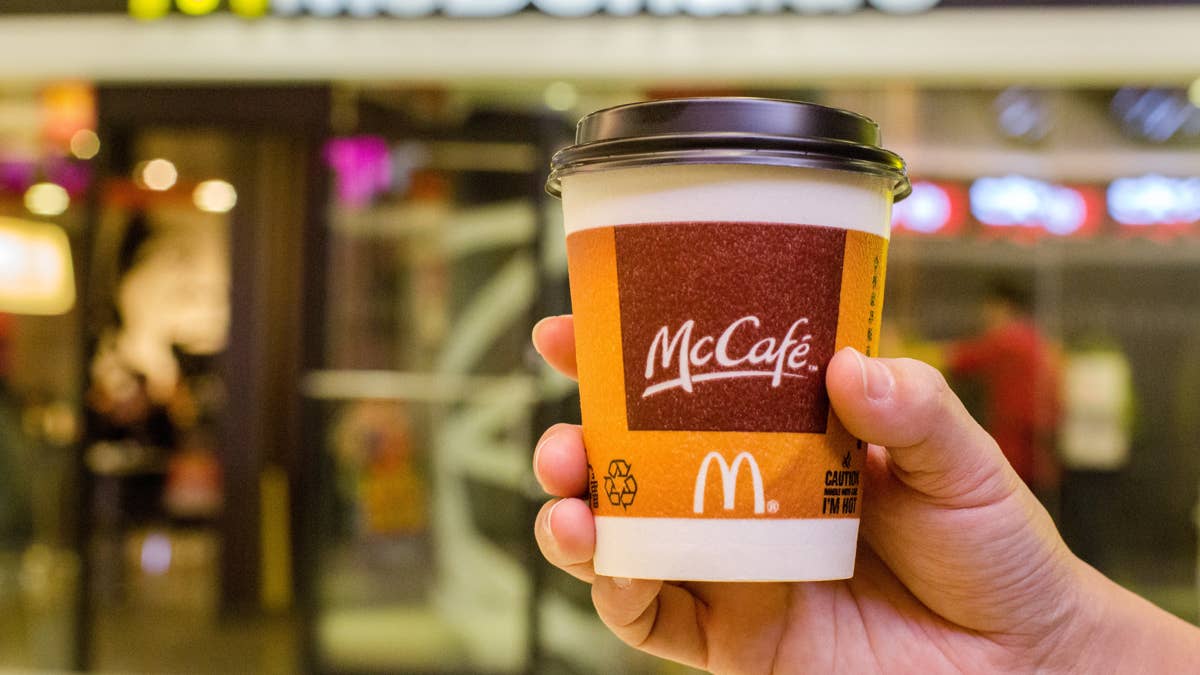
McDonald’s (MCD) has confirmed it is discontinuing its seasonal Pumpkin Spice Latte from its 2026 fall menu, ending the beverage’s 13-year tradition.
The Pumpkin Spice Latte was first launched at select McDonald’s locations in 2013 before becoming available nationwide in 2016, according to the company.
The fast-food giant is replacing the seasonal drink with a new Caramel Apple Pie coffee lineup as it brings innovation to its beverage business.
The limited-time offerings combine apple and caramel flavors with McDonald’s coffee and are topped with salted caramel-flavored whipped cream and crumbled apple pie pieces.
According to McDonald’s, the lineup includes:
- Caramel Apple Pie Frappe
- Hot Caramel Apple Pie Latte
- Iced Caramel Apple Pie Latte
- Caramel Apple Pie Iced Coffee
The new Caramel Apple Pie Coffees are available at participating McDonald’s restaurants nationwide for a limited time.
The lineup gives McDonald’s a different seasonal option as major coffee chains lean heavily into pumpkin-spice offerings during the fall.
Why McDonald’s is discontinuing the Pumpkin Spice Latte
McDonald’s has not simply replaced one seasonal flavor with another. The move is part of a broader, multi-year effort to expand its beverage business and create more occasions for customers to visit its restaurants.
The company has been investing in beverages as a growth opportunity, with its strategy extending beyond traditional McCafé offerings.
In March 2025, McDonald’s introduced its Restaurant Experience Team, bringing together operations, supply chain, franchising, development, restaurant design, delivery, and Speedee Labs. According to the company, the goal is to streamline innovation and improve execution across its markets.
McDonald’s also established three global Category Management teams focused on beef, chicken, and beverages/desserts, signaling a more specialized and data-driven approach to menu development.
The company’s beverage strategy has evolved over several years.
McCafé, which was added to its U.S. menus in 2009, expanded McDonald’s presence in coffee and premium beverages. The company later used CosMc’s, its beverage-focused concept, as a testing ground for new drinks and restaurant formats before closing all its locations in 2025.
Some of the lessons from those initiatives are now being incorporated into McDonald’s broader beverage strategy.
During McDonald’s fourth-quarter fiscal 2025 earnings call, executives said the company planned to expand its beverage offerings across the U.S. and select international markets in 2026. Beverages were identified as one of the company’s fastest-growing categories.
McDonald’s has estimated that beverages represent a global opportunity worth more than $100 billion.
In 2025, the company tested new beverages, including energy drinks, iced coffees, refreshers, and crafted sodas, at approximately 500 U.S. restaurants. Executives later described the test as “highly successful” and said it exceeded expectations.
“The new beverage offerings drove incremental occasions across different dayparts as well as higher average check,” McDonald’s Chief Restaurant Experience Officer Jill McDonald said during the company’s earnings call.
The strategy is already showing signs of traction.
Zhang Peng/LightRocket via Getty Images
Why beverages are strategically important in the restaurant industry
Beverages can be particularly attractive to restaurant operators because their ingredient costs can be relatively low compared with their selling prices.
However, it is important to distinguish gross margin and net profit margins. A beverage can carry a high gross margin without translating directly into the restaurant’s bottom line, since operators still have to cover labor, rent, utilities, marketing, technology, and other operating expenses.
Restaurant businesses overall tend to operate with relatively thin net margins. Restaurant365 places average restaurant profit margins in the low single digits, although profitability varies considerably by restaurant format and operating model.
Beverages can nevertheless provide an attractive margin because, despite requiring relatively inexpensive ingredients, many drinks can be sold at a significant markup.
The opportunity becomes even more significant when a beverage encourages a customer to make an additional visit or purchase.
That is particularly relevant to McDonald’s current strategy.
“In a landscape where consumers increasingly perceive grocery stores as offering ‘much better’ value (55 percent) than restaurants, limited-service restaurants must innovate to regain their footing,” Rich Products Senior Customer Marketing Manager Alyssa Barrett told QSR Magazine.
“Specialty beverages offer a way to refresh the value proposition — not just in terms of cost, but in experience, convenience, and customization.”
The broader industry is also facing pressure on consumers’ restaurant spending, making menu innovation an increasingly important way for chains to differentiate themselves.
McDonald’s sees early results
McDonald’s beverage strategy comes at a time when the company is working to improve its U.S. business.
During its second quarter of fiscal 2026, McDonald’s U.S. comparable sales increased 0.8%, driven by positive check growth, including favorable product mix. The improvement was partially offset by a decline in comparable guest counts.
Here’s some of my previous coverage of McDonald’s:
- McDonald’s drops 6 new drinks and a surprising fashion collab
- McDonald’s brings back fan-favorite Happy Meal
- McDonald’s unexpectedly adds 10 new chicken menu items
McDonald’s CEO Chris Kempczinski said on the company’s latest earnings call that the U.S. business had slowed significantly and fell short of expectations, citing execution issues during the quarter.
Still, the company’s new beverage platform delivered an early positive signal.
McDonald’s launched the new beverage platform in May, and executives said early results exceeded expectations across its lead markets of the U.S., Canada, and Germany.
In the U.S., beverage sales were ahead of plan, with the company reporting higher guest checks and new customer occasions throughout the day.
That gives McDonald’s another reason to continue expanding the category.
The decision to remove the Pumpkin Spice Latte from its 2026 fall menu therefore represents more than a change in seasonal flavor.
It gives McDonald’s an opportunity to test whether a beverage tied to the brand’s apple pie heritage can generate the same kind of seasonal excitement while supporting a broader strategy to make drinks a larger part of the customer experience.
Related: McDonald’s unveils unexpected first-ever partnership
