
 By
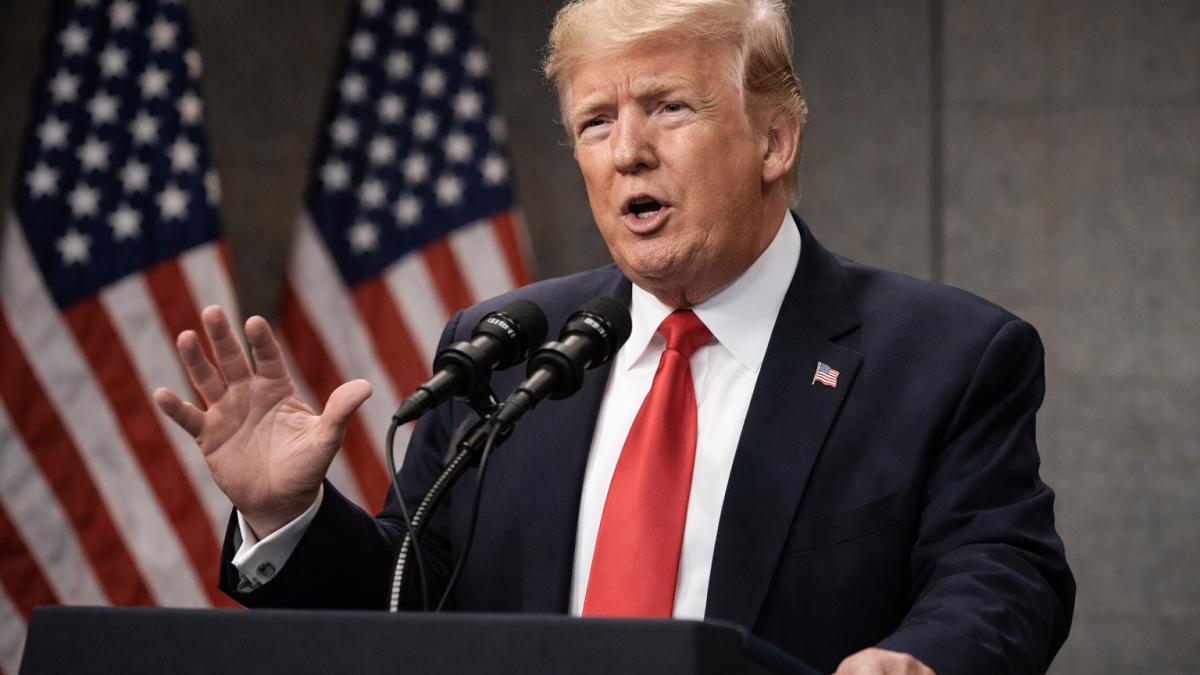
By US President Donald Trump said on Tuesday that Washington is considering financial support measures for the United Arab Emirates, including a potential currency swap arrangement, as geopolitical tensions linked to the Iran conflict raise economic risks across the Gulf region.
Speaking in an interview with CNBC, Trump confirmed that discussions around a swap line were underway. “It is,” he said when asked if such an arrangement was being considered, describing the UAE as a “good ally” during a period of heightened uncertainty.
UAE explores financial backstop options
The comments follow reports that UAE officials have initiated discussions with US policymakers about securing financial support mechanisms should the ongoing conflict with Iran worsen.
According to a report by The Wall Street Journal, the idea of a currency swap line was raised by UAE central bank governor Khaled Mohamed Balama during meetings in Washington with the US Treasury Secretary Scott Bessent and Federal Reserve officials.
The discussions were described as preliminary and precautionary, with Emirati officials emphasizing that while the country has so far avoided the worst economic fallout, risks remain.
The conflict has disrupted key economic channels, including oil exports routed through the Strait of Hormuz, a critical artery for global energy trade.
Officials warned that prolonged disruption could strain foreign reserves, weaken investor confidence, and challenge the UAE’s position as a global financial hub.
War impact raises pressure on oil flows and reserves
The Iran conflict has already taken a toll on regional energy infrastructure and logistics. Attacks and disruptions have curtailed the UAE’s ability to export oil via tanker routes, limiting access to a key source of dollar revenues.
The potential for further escalation has raised concerns about liquidity pressures and capital outflows. Analysts note that even economies with substantial reserves, such as the UAE, could face stress if the conflict persists or intensifies.
Trump acknowledged the unusual nature of the situation, stating, “They’re really led by incredible people… I mean, I’m surprised, because they are really rich.”
He added, “If I could help them, I would, I mean, we’re helping them much more with what we’re doing with the war.”
While the UAE has not made a formal request for a swap line, officials have indicated that such a facility could serve as a safeguard in the event of a deeper financial shock.
Currency swap implications and global context
Currency swap lines typically provide central banks with access to foreign currency—most often US dollars—to stabilize financial systems during periods of stress.
These arrangements are usually managed by the Federal Reserve and are extended selectively, often to economies with close financial ties to the United States.
In this case, US officials have suggested that approval from the Federal Reserve may be unlikely, given the UAE’s relatively limited direct exposure to US funding markets compared with traditional recipients.
However, alternative mechanisms remain possible. The US Treasury has previously used its Exchange Stabilization Fund to provide similar support, including a $20 billion arrangement with Argentina last year.
Trump signaled openness to assisting the UAE if necessary, stating, “If the UAE had a problem – I find it hard to believe – but if they had a problem, we would be there for them.”
Officials noted that if dollar access were constrained, the UAE could be forced to consider alternative currencies for transactions, a shift that could carry wider implications for the global financial system.
The post Trump weighs UAE currency swap as war risks test Gulf economy appeared first on Invezz
