
 By
By Ulta Beauty has recently faced backlash from customers over a store policy aimed at boosting safety and security, as the criticism continues to intensify.
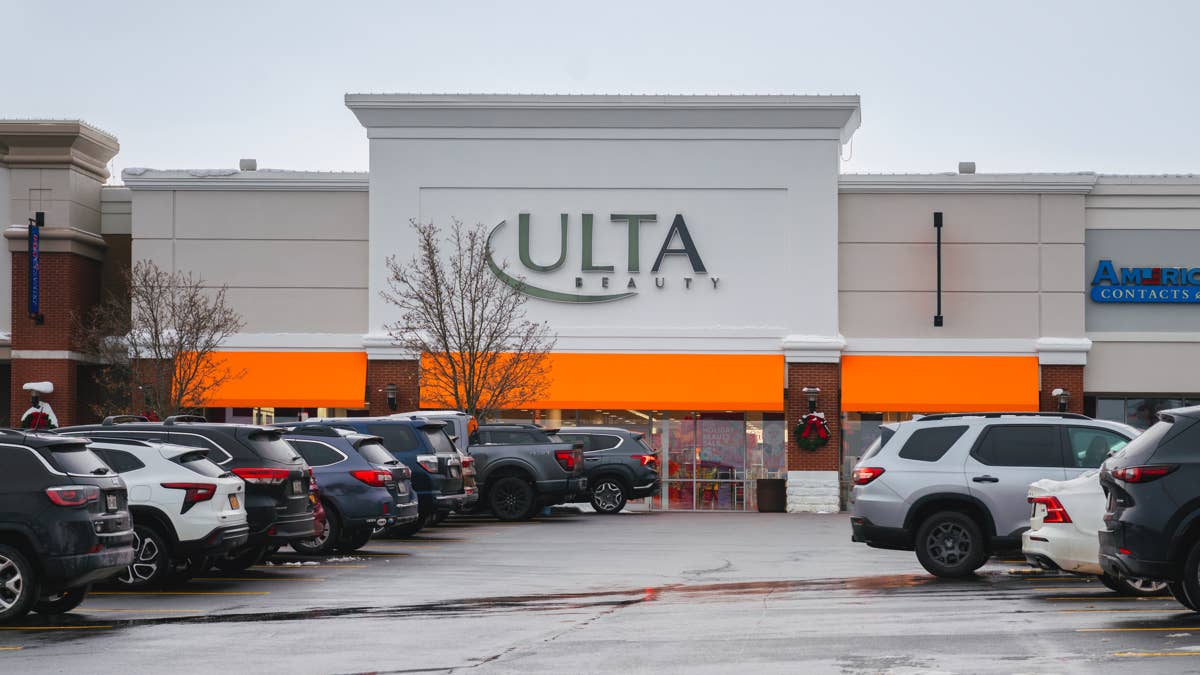
In 2025, Ulta Beauty partnered with Flock Safety to deploy automated license plate-reading cameras powered by artificial intelligence in some of its stores. According to a recent report from Retail Dive, these cameras are installed at less than 1% of Ulta’s roughly 1,500 U.S. locations.
On its website, Flock Safety claims that its technology “helps communities deter crime, respond to emergencies, and investigate safety incidents.”
Major retailers such as Home Depot, Lowe’s, Walmart, and Target also use these cameras, often citing anti-theft and organized crime as the reasoning behind their decision to install the technology.
Ulta Beauty petition to remove Flock cameras gains traction
However, some of these retailers have faced blowback from consumers over their use of Flock cameras, and Ulta Beauty is not immune. The beauty retailer is now facing a petition that has garnered more than 15,000 signatures, urging it to remove the cameras from its stores.
UltraViolet, a women’s advocacy group, launched the petition on Aug. 26. On the group’s website, it touts a campaign called “Ulta: Mass surveillance isn’t pretty,” in which it demands that the company “drop flock now.” It claims that the technology puts “women’s safety and privacy at risk.”
In the petition, UltraViolet states that “the negative impacts of Flock’s mass surveillance system are staggering.”
The group flags that its use comes at a time when “women seeking reproductive healthcare, immigrants, protesters, journalists, and people simply looking out for their neighbors’ safety — are increasingly being monitored and attacked by federal agents and other bad actors.”
Related: Ulta Beauty adds new offering for customers amid Amazon threat
“Flock’s dystopian license plate readers are supplying the data needed to carry out these attacks,” said UltraViolet in the petition. “And that’s not all: these systems are often wrong and are regularly used to stalk women.”
The group states that Flock cameras misread the states on one in 10 license plates when scanning them, and there are “countless reports” of law enforcement agents using Flock databases to stalk women, including ex-partners.
“Women are disproportionately at risk of violence and deserve safety,” said the group. “But it’s clear that this massive network of surveillance cameras is meant to monitor, control, and punish us, rather than actually keep us safe. That’s why we feel betrayed: Ulta’s contracts with Flock are about saving Ulta money, not about protecting women customers.”
On Ulta Beauty’s website, it states that it uses automated license plate reader (ALPR) systems and collects information from them for “the security of our premises, employees, guests, and assets.”
M. Suhail / Getty Images
Ulta Beauty shoppers consider avoiding its stores
Many consumers took to social media platforms TikTok and Instagram to spread the word about Ulta Beauty’s use of Flock cameras and to urge the company to remove the surveillance technology.
Some consumers even took to Reddit to say they will avoid Ulta Beauty stores because of the camera system.
“I plan to use up my rewards and won’t be shopping at Ulta going forward. They haven’t come out to deny they use this technology so I’m going to assume that they do,” wrote one customer.
“I made a purchase a couple days ago right before I heard the news, and it will be my last. You can literally get what Ulta carries anywhere. I mainly just went there to spend money when I was bored. Not anymore,” wrote another.
“Yup, its disgusting and knowing that cops have used flock cameras to stalk their exes, ULTA does not feel like a safe place at all anymore,” wrote a consumer.
Flock cameras aren’t always accurate
These concerns come after a Business Insider report in July shed light on how inaccurate Flock cameras can be when scanning license plate information.
The report revealed that in Roseville, California, Flock cameras sent 1,427 alerts to the Roseville Police Department between 2023 and 2024, identifying vehicles it scanned as stolen or used in a felony.
However, after the police department took a closer look at the notifications, they found that the Flock software misread the license plate in 71% of alerts.
More Retail:
- Ross Stores customers will soon feel a notable change in stores
- Publix struggles to reverse concerning customer behavior
- Kohl’s drops generous offers as it tries to win back customers
The cameras also frequently failed to detect vehicles, snapped blurry images, incorrectly identified license plate numbers and states, and sent police delayed alerts about vehicles potentially linked to crimes.
In a separate Business Insider report in March, Alla Valente, a principal analyst at Forrester, warned that the pendulum of public sentiment around these Flock cameras “is swinging against this type of surveillance.” She also said that Flock will “have their work cut out for them.”
“Either they’re going to continue to do what they do and be used by law enforcement and the federal government, or they’re going to think about privacy, think about security, think about controls, think about transparency,” said Valente. “It all depends on where they see themselves in the next few years.”
Related: Kohl’s expands in-store partnership as customers look elsewhere
